The plan check came back with notes. Now the whole project waits on redraws nobody in your office has time for. Send us the correction letter — we turn the round around overnight. And if the set is one we drafted, that correction round is free.
Every installer knows the sentence. The plan check comes back with only a few small notes — and somehow those few notes eat two weeks. Not because the fixes are hard, but because they land on the desk of people who are already on roofs, on sales calls and on other projects. The set sits. The permit sits. The customer's install date quietly slides.
Corrections are also where small drafting gaps turn expensive. Rules vary by jurisdiction and shift between revision cycles — a note that cites this year's local amendment, a label wording the reviewer wants in their form, a sheet order their checklist expects. Answer half the letter and the resubmittal buys another full round, with another full wait behind it.
VoltDraft treats the correction round as a product, not an errand. The letter is mapped comment by comment, every affected sheet is redrawn and cross-checked against the rest of the set, and the package goes back with a response sheet that walks the reviewer through what changed and where. It is the fastest work we do, because we know exactly what it is blocking.
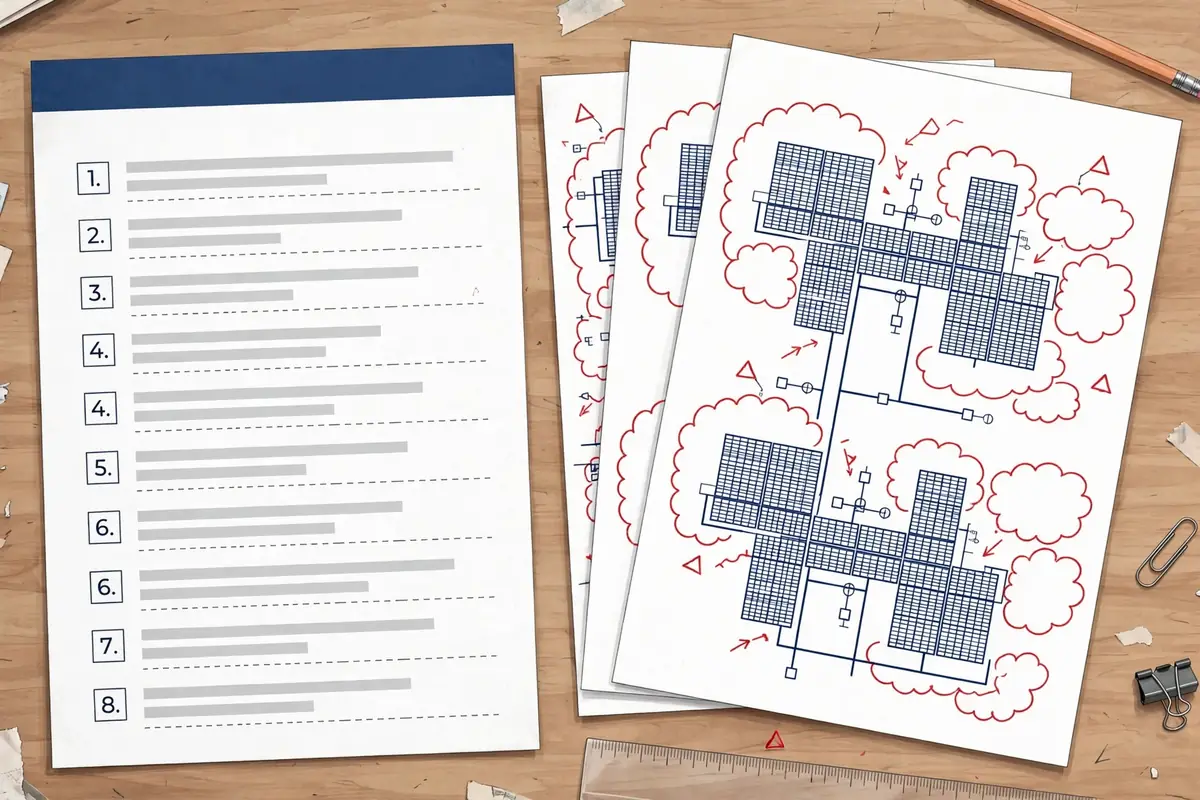
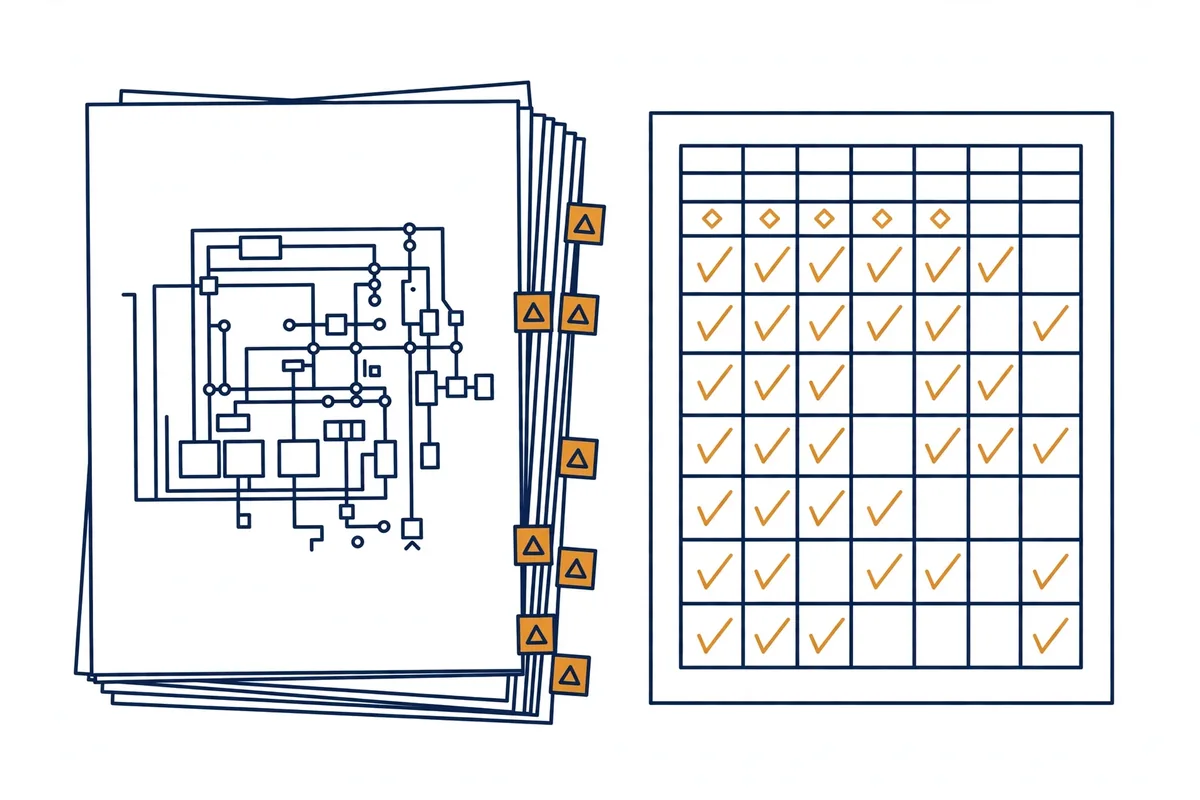
The process is deliberately boring — the same four steps every round, so you always know where a resubmittal stands:
Forward the AHJ correction letter, the plan check comments or the reviewer's marked-up set. If we drafted the original set, we already hold the native files and the letter is all we need.
Each note is logged in order and matched to the sheet it touches. A comment that ripples into the diagram, schedules or labels is mapped to all of them — not just the sheet it was written on.
Affected sheets are revised, clouded and tagged in your revision style. A comment-response sheet states, for every note, what changed and on which sheet it now appears.
The revised set is checked sheet against sheet, the index is updated, and you receive a clean PDF plus updated DWG files ready for your engineer to review and for you to resubmit.
That response sheet is worth naming on its own. Reviewers re-check a resubmittal faster when each of their comments is answered in writing and pointed at a sheet — it is the difference between a reviewer verifying fixes and a reviewer re-reviewing the whole set. Our blog post on why AHJs reject electrical plan sets covers the comment patterns we see most, round after round.

This is the policy, stated the way we state it to every client: if the city (AHJ) sends corrections on a plan set we drafted, that correction round is free. We produced the set; we stand behind getting it through plan check. You send the letter, we do the redraws, the response sheet and the cross-check, and the round costs you the same as the wait used to — nothing.
The policy covers the correction round: the AHJ's comments on the sheets we drafted, in the scope that was agreed. What it does not stretch to cover is new scope wearing a correction's clothes — a system redesigned after submission, extra sheets the original job never included, or changes the client wants rather than the reviewer. Those are quoted as a fixed price before any work starts, so the line is never a surprise on an invoice.
And if the set under correction was drafted by someone else, the door is still open: we handle the round at one fixed fee, confirmed in writing after we see the letter and the set. No hourly meter, no open tab — the same discipline as our first-submission work.
The pricing of this service is the policy itself. Correction rounds on plan sets we drafted are free — the first round the AHJ sends back, handled in full. Correction rounds on sets drafted elsewhere are quoted as one fixed fee per round once we have seen the letter and the set, and confirmed in writing before work begins. New scope identified inside a round is quoted the same way, separately, before it is touched.
Turnaround is built for the correction clock: rounds run on the overnight workflow, so a letter sent by your US evening is usually answered with revised sheets the next US morning, and inside 24–48 hours for large rounds. While the set is with us, your team keeps installing — the corrections loop stops being the thing your week is scheduled around.
Correction rounds most often attach to our solar permit plan sets and utility packages; if your corrections came from the utility side instead of the city, our utility interconnection and PTO support page covers that resubmittal path.
First-submission drafting and the other resubmittal paths.
One correction round is one cycle of comments from the AHJ on a submitted set: the correction letter or plan check comments, our redraw of every affected sheet, a comment-response sheet answering each note, and the updated package for resubmittal. If the AHJ answers that resubmittal with a fresh set of comments, that is the next round. Rounds are counted per submission cycle, not per comment or per sheet.
Forward the correction letter or the portal comment list, plus the submitted set it refers to — the PDF you sent in and the DWG files if you have them. Marked-up sheets from the reviewer help and are welcome. If we drafted the original set, we already hold the native files, so the letter alone is enough to start the round.
Yes. Every resubmittal package includes a comment-response sheet that lists each AHJ comment in order, states what was changed in response, and names the sheet where the change appears. Reviewers re-check faster when the response maps note to sheet instead of leaving them to hunt. The response sheet is documentation support for your submission; your engineer reviews and approves the package before it goes back.
Then that part is new scope, and it is quoted as a fixed price before we start it. Examples: a system redesigned after submission, added sheets the original scope never included, or changes driven by the client rather than the reviewer. The line is simple: comments on what we drafted are the correction round; changes to what was agreed are a new, quoted piece of work. You always see the number first.
Correction rounds run on the overnight workflow by default: send the letter by your US evening and the revised sheets are typically in your inbox the next US morning, inside our standard 24 to 48 hour window for larger rounds. Correction time should not be the reason a resubmittal misses a week — that is the whole point of sending the round to a drafting bench instead of a busy office.
The free round applies to plan sets VoltDraft drafted — if the city sends corrections on a set we produced, that correction round is free. For a set drafted by someone else, we still handle the corrections gladly, quoted as one fixed fee per round confirmed before we start. Many clients bring us a corrected set once and then have their next sets drafted here, where the rounds are covered.
Forward the AHJ comments on WhatsApp and the round starts the same night. If we drafted the set, the round is free — and either way, you will know the full picture before any work begins.
WhatsApp Us