From field markups to a record set you can hand over
Every electrical job drifts from the issued drawings. A panel moves two feet to clear a duct. A run gets re-routed above a ceiling that changed. Fixtures swap, circuits get rebalanced, and the foreman writes it all down — in red pen, on a print that has lived in a job trailer for three months. That marked-up set is the truth about what got built. The problem is that almost nobody accepts it at closeout in that form.
Owners, general contractors and facility teams want a clean record set: the same sheets, updated, with every field change drawn in properly and the scribbles gone. Producing that set takes hours your office does not have at the end of a job, when your people are already starting the next one. That gap is exactly what this service fills.
Send us the issued set and your field markups. We read every note, draw in every change, and return a clean as-built set in PDF plus native DWG. Your markups stay the source of truth — we draft what your crew recorded, we flag anything we cannot read, and we never invent a detail to make a sheet look finished.
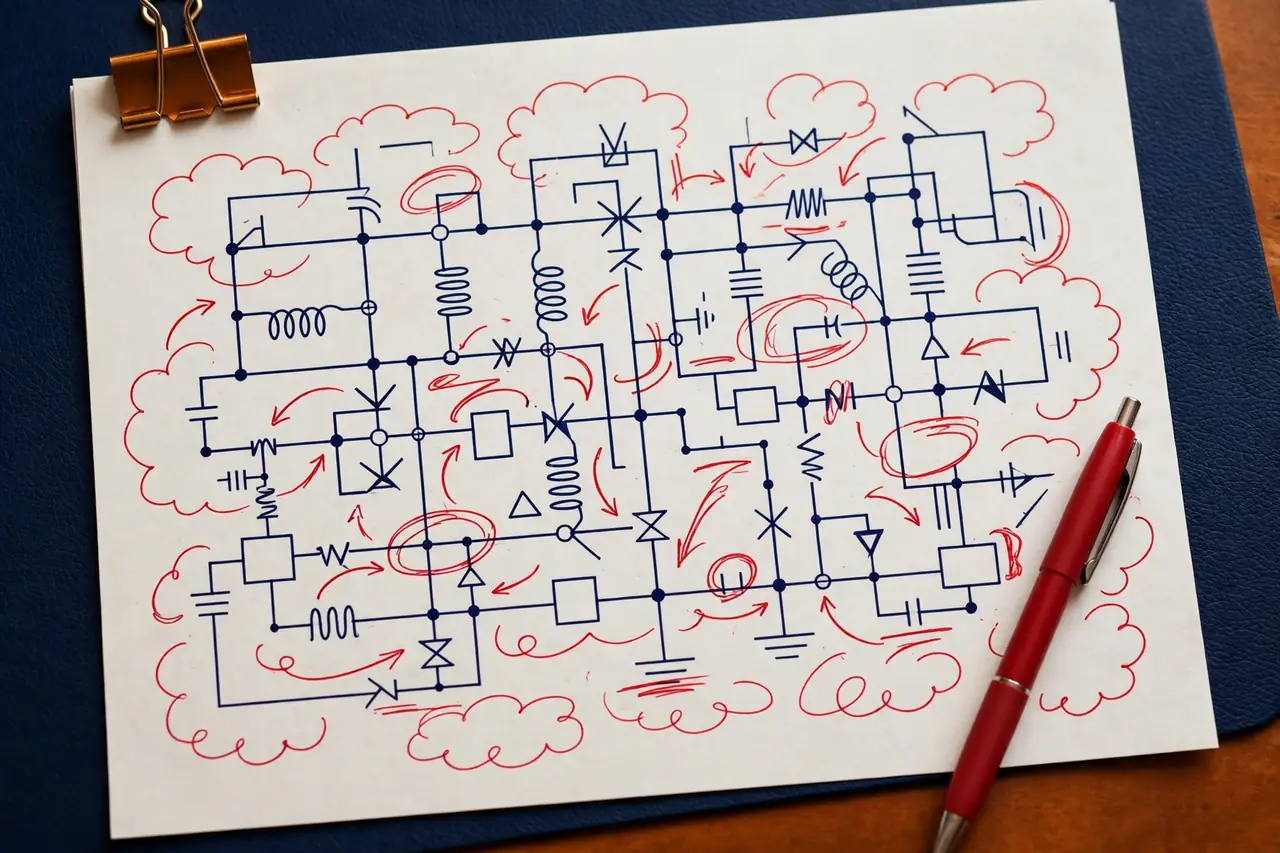
Sample: as-built plan with redline changes — record sheet
What is included in an as-built set
Each sheet is rebuilt to your title block, layers and sheet standards, so the record set matches the rest of your project files.
Record set contents
- Every redline change drawn into the plans, schedules and diagrams it touches
- Markup layer and field notes removed — clean sheets, ready to hand over
- Revision clouds and delta triangles where your format calls for them
- Delta notes that say, in plain words, what changed on each revised sheet
- Updated title blocks, sheet indexes and revision dates across the whole set
- Panel schedules and circuit data updated to match the as-built plans
- A short list of any markup we could not read, sent back for your call before we finish
- Closeout package: print-ready PDF set plus native DWG files for every sheet
How we work through your markups
We start by reading the whole markup set before drawing anything. That first pass catches the notes that affect three sheets at once — a panel relocation, for example, that also changes a schedule, a single-line diagram and a conduit run. Catching those links early is what keeps a record set consistent instead of patched.
Then we rebuild sheet by sheet. Where your firm works from native CAD, we revise your own files on your layers. Where all you have is a redlined PDF, we rebuild the sheet in CAD from the PDF, draw in the changes, and set the sheet up so the next revision is a quick edit instead of another rebuild.

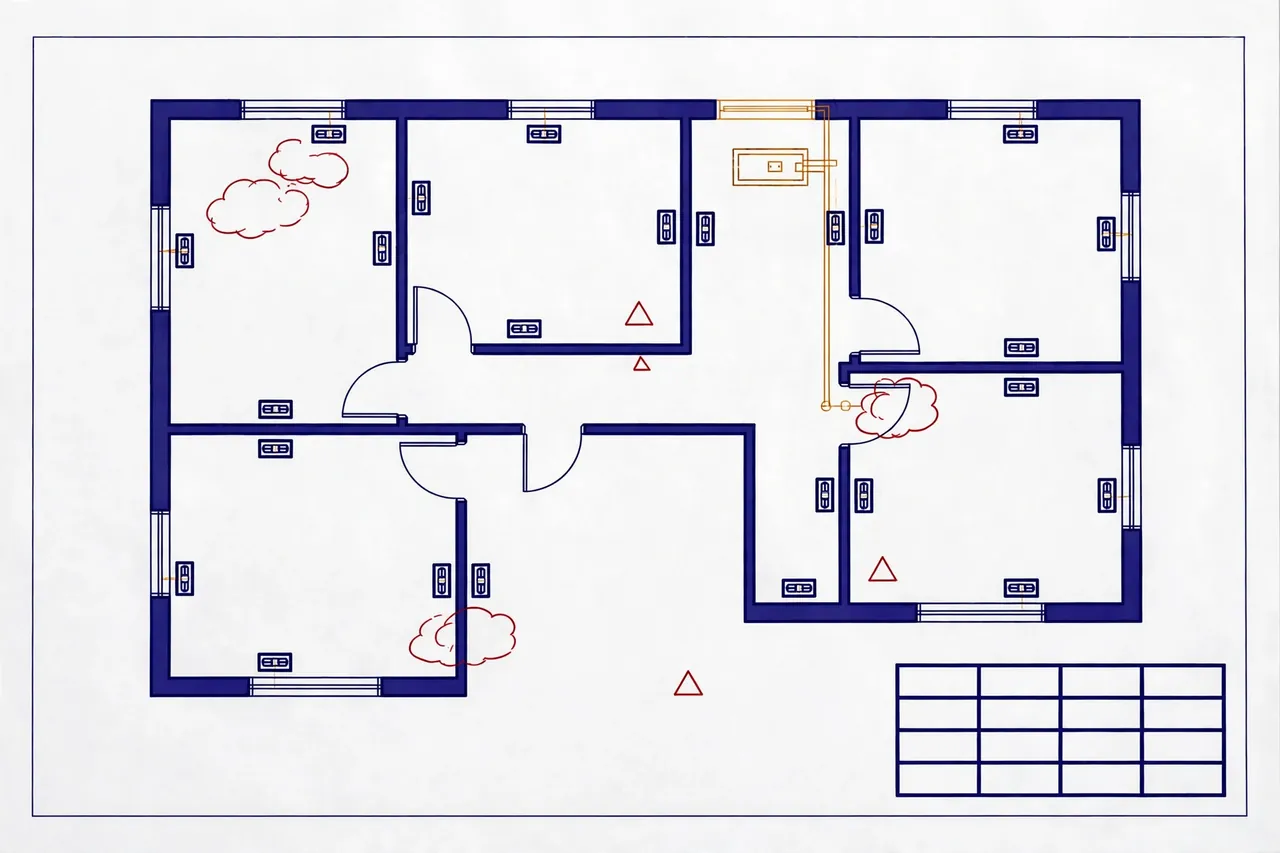
Sample: as-built floor plan — finished record sheet
Turnaround built for closeout pressure
Redlines pile up at the worst time. The job is done, the crew has moved on, and the closeout package is the last thing standing between your firm and final payment. Most redline revision batches come back from VoltDraft in 24–48 hours. Send a batch by your US evening and, for small to mid-size sets, the clean sheets are in your inbox the next US morning.
That speed comes from the overnight workflow, not from cutting corners. Each set gets a read-through, a consistency pass across linked sheets, and a final check against your markup list before it ships. If a note is unclear, you hear from us while there is still time to ask the foreman — not after the package has gone to the owner.
One honest note on scope: we are a drafting studio, and this is a documentation service. Drafting only — no PE stamp. Final review and stamp remain with your licensed engineer. The as-built set records what your team built and reported from the field; it does not certify the work, and we never present it as doing so.
What we need from you
- The issued drawing set the markups were made against — PDF or CAD
- Redlined PDFs, marked-up prints as scans, or Bluebeam markup files
- Field notes, change orders or photos that explain changes the pen did not
- Native CAD files and your title block, if you have them
- The closeout format your owner or GC expects — sheet naming, revision style, file types
- A note on which sheets changed, if only part of the set was touched
Messy markups are normal. If your scans are rough, send them anyway — the read-through pass sorts out what is clear, and we will list anything that is not.
Closeout packages and pricing
Closeout usually needs more than a stack of updated sheets. We assemble the full package: the clean PDF record set, the native DWG for every sheet, updated schedules, and a revision log that ties each changed sheet to the markup or change order behind it. If your GC works through a document portal with strict file naming, tell us the pattern and we will name every file to match before delivery.
As-builts and redline revisions start from $45 per sheet. The from-price covers a standard sheet with a normal level of markup; sheets with very heavy changes or full rebuilds from PDF are quoted per sheet before we start. Every first project begins with a fixed quote confirmed in writing, so the closeout cost is known before the work begins — no open-ended hourly meter running while a deadline closes in.
Many contractors send us redlines on every job once the first set lands. If that is your pattern, a standing weekly arrangement keeps your record sets current while the work is still fresh in the crew's mind, which makes each as-built faster and more accurate than a single end-of-job catch-up.
How a redline batch runs
Four steps from marked-up prints to a handover-ready set.
Send the markups
Message us the issued set and your redlined PDFs or scans on WhatsApp. Rough scans are fine — we sort out what is readable on our first pass.
Fixed per-sheet quote
You get one fixed price per sheet, confirmed in writing before we touch a drawing. Heavy rebuilds are quoted per sheet, never left open-ended.
Read-through, then rebuild
We read the full markup set first, catch the changes that cross sheets, then rebuild each sheet clean with clouds and delta notes where your format needs them.
Closeout package back
Print-ready PDF record set plus native DWG files, with a revision log tying each changed sheet to the markup behind it — most batches in 24–48 hours.
One habit saves real money on as-builts: send markups while the job is still live, not months after demobilization. A foreman's note that looks obvious in week three can be a guessing game in month six. Contractors who send us a batch at each project milestone get cleaner record sets, fewer questions back from us, and a closeout package that is mostly done before the final walkthrough even happens.
Related services
As-builts often close out a set that started with these services.
As-built and redline questions
What is the difference between redlines and as-built drawings?
Redlines are the marked-up drawings your field team produces during construction — notes, sketches, and corrections drawn over the issued set. As-built drawings are the clean, final record set made from those markups, with every change drawn in properly and the markup layer removed. Owners and general contractors usually ask for as-builts at closeout, while redlines are the working notes that get you there.
What should I send you to start an as-built set?
Send the issued drawing set, your redlined PDFs or marked-up scans, and any field notes or photos that explain a change the markups do not make clear. Native CAD files help but are not required — we can rebuild from PDF. Tell us the record format your owner or general contractor expects, and we will match sheet names, title blocks, and revision style to that format.
How accurate are as-builts made from contractor markups?
An as-built set can only be as accurate as the markups behind it, and we are plain about that. We draft exactly what your field team recorded, flag notes we cannot read or that conflict with each other, and never invent a location or a size. If a markup is unclear, we ask before drawing it, so the record set reflects the work as your crew reported it.
Can you convert our redlined PDFs into clean CAD as-builts?
Yes. This is one of our most common jobs. We rebuild the sheets in native CAD, draw in every redline change, clear the markup layer, and update title blocks, panel schedules, and circuit data to match. You get a clean PDF record set plus the DWG files, so future renovations start from editable drawings instead of a stack of marked-up prints.
How fast are redline revisions turned around?
Most redline revision batches come back in 24 to 48 hours, depending on sheet count and how heavy the markups are. Small batches sent by your US evening are often in your inbox the next US morning through our overnight workflow. If a batch is large or the markups need a lot of cleanup, we confirm the timeline in writing with your fixed quote before starting.
Closeout is waiting on clean sheets, not more work
Send your issued set and redline markups tonight. We will confirm a fixed per-sheet quote in writing and return a record set your owner can accept — most batches in 24–48 hours.