AutoCAD · AutoCAD Electrical · Revit · Bluebeam RevuOvernight turnaround — send by US evening, drafted by your morning

Single-Line Diagram Drafting for Contractors, Panel Shops & Solar Teams

Clean, readable single-line diagrams built from your photos, sketches, panel schedules or old PDFs — drawn in your title block and ready for permit review, estimating or the build itself.

Quick answer: A single-line diagram (SLD) shows how power flows through a building or site, from the utility service to the last panel. VoltDraft drafts SLDs for electrical contractors, panel shops, solar installers and industrial clients, starting from $55. You send photos, schedules or sketches; we return a print-ready PDF plus the native DWG, usually within 24–48 hours.

Why the SLD Carries the Whole Job

The single-line diagram is the one sheet almost everyone on a project touches. The estimator prices gear from it. The permit reviewer checks service size and protection against it. The panel shop builds to it. The field crew traces circuits with it months later. When that sheet is messy, hand-drawn or out of date, every one of those steps gets slower and riskier.

A good SLD does the opposite. It puts the whole distribution system on one clear sheet: where power comes in, how it is protected, how it splits, and what each piece of gear is called. Anyone who picks it up should understand the system in under a minute. That clarity is a drafting job — line weights, spacing, consistent symbols and labels that match the panel schedules word for word. It is exactly the kind of slow, careful sheet work that eats an in-house team's week, and exactly what a drafting studio is built to hand back finished.

We draft SLDs for new construction, service upgrades, tenant work, solar interconnections and industrial plants, in AutoCAD or AutoCAD Electrical, inside your title block and standards.

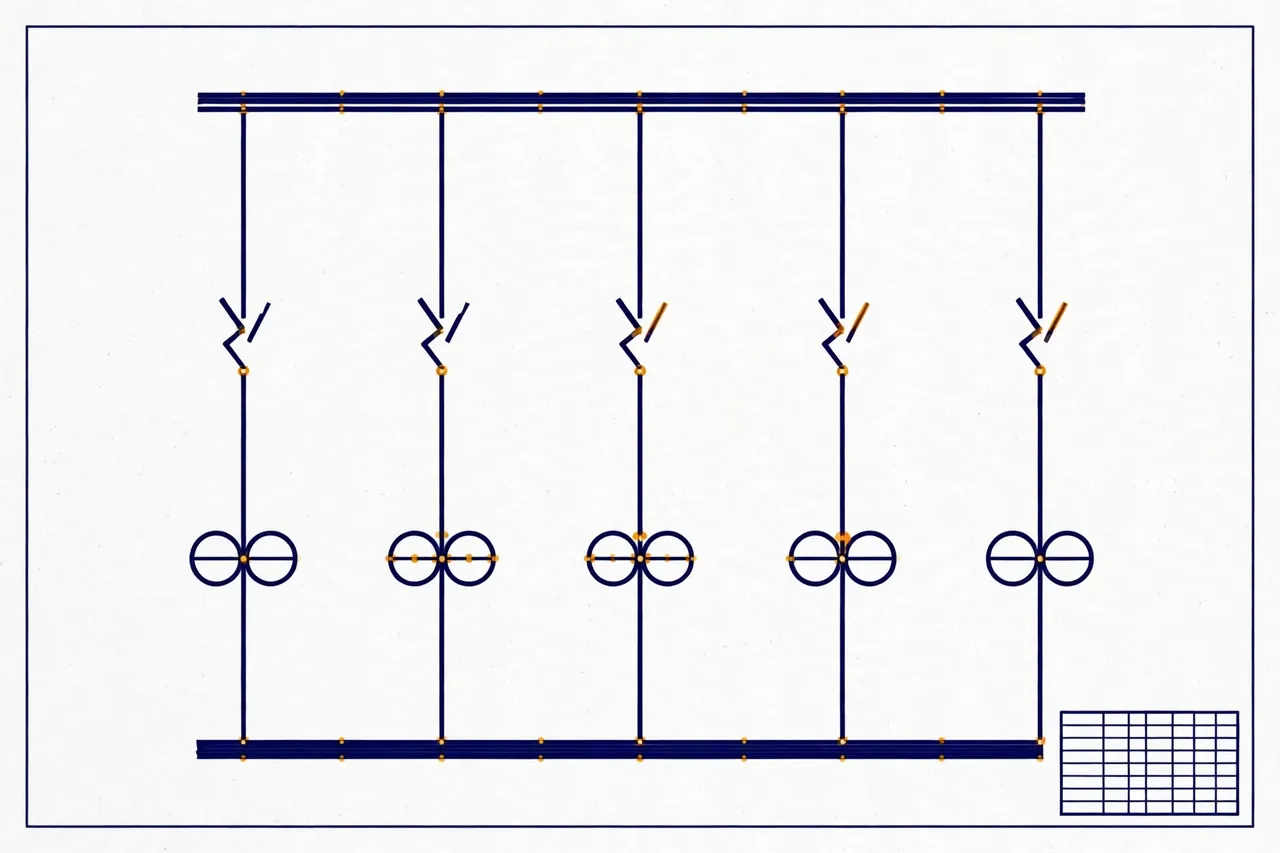
Single-line diagram showing utility service, main switchboard, feeders and distribution panels
Sample single-line diagram sheet with riser layout, breaker callouts and equipment tags

What an SLD Shows

A complete single-line diagram covers the full path of power, top to bottom:

  • Utility service — service type, voltage, phase, meter and CT cabinet where they apply.
  • Main gear — main breaker or fused switch, switchboard or service panel, with ratings as provided.
  • Feeders — conductor and conduit callouts between gear, sized and labeled per your input.
  • Transformers — primary and secondary voltages, kVA rating and connection notes.
  • Distribution and branch panels — panel names that match your panel schedules exactly.
  • Generators and ATS equipment — standby source, transfer switch and the loads it carries.
  • Solar and other sources — inverter output and point of interconnection for solar projects.
  • Protective devices — breaker and fuse sizes at each level, plus fault-current data where you provide it.

Each element gets its tag, rating and connection shown the same way across the sheet, so a reviewer never has to guess which label belongs to which box.

Built From What You Already Have

You do not need a tidy input package to start. Most SLD jobs begin with whatever the field or the office already holds:

What we need from you

  • Photos of the service, switchgear and panels, including nameplates where you can get them
  • Existing panel schedules, in any form — spreadsheet, PDF or photo of a panel door card
  • A hand sketch of the system, even a phone photo of a notebook page
  • An old PDF or scan, if the system was drawn before
  • Service size and voltage, and the panel names you want used
  • The NEC edition and jurisdiction, if the sheet is going in for permit

What is included

  • Clean CAD redraw of the full diagram in your title block
  • Consistent symbols, tags and feeder callouts across the sheet
  • Equipment data placed exactly as you provided it
  • A short list of any values we could not read or confirm
  • Print-ready PDF plus native DWG you can edit later
  • One normal round of drafting corrections after your review

Panel shops use this service to turn a winning bid into a buildable gear diagram. Solar teams use it for the NEC 690 and 705 one-line that sits inside the permit set. Industrial clients use it to finally get an accurate record of a plant that has grown panel by panel for twenty years. The starting point differs; the finished sheet standard is the same.

Data Shown — and Data We Will Not Invent

An SLD often carries engineering data: available fault current, equipment interrupting ratings, transformer impedance, generator sizing. When you or your engineer provide those values — from a utility letter, a coordination study or an equipment submittal — we place them on the sheet clearly, in the format your office uses.

What we never do is make those numbers up. A fault-current figure that looks right but came from nowhere can send a whole gear order wrong. If a value is missing, the sheet goes back with a clear flag and a one-line question, not a quiet guess. You supply the number, we drop it in, and the diagram stays something your engineer can stand behind. Drafting only — no PE stamp. Final review and stamp remain with your licensed engineer.

We draft to the NEC edition your project uses, most often 2020 or 2023, including the labeling and source-side and load-side connection notes that solar and generator diagrams need under Articles 690 and 705. Tell us the edition at the start and the sheet follows it.

NEC code book and drafting references open beside a single-line diagram in progress

Pricing and Turnaround

Single-line diagrams start from $55 for a standard service-and-panels system. Larger systems — multiple services, long feeder runs, generator and solar sources on one sheet — are quoted as a fixed price before work begins, based on the size of the system and the state of the input. Every first project starts with a fixed quote confirmed in writing, so the price you approve is the price you pay. The from-price covers a standard diagram; the final quote depends on size and complexity.

Standard turnaround is 24–48 hours. Because you receive the native DWG, future changes stay cheap: adding a panel, swapping a breaker size or splitting a feeder is a small revision, billed as a small fixed fee or under hourly support from $18/hr. Your diagram becomes a living record instead of a one-time picture.

One Diagram, Four Different Jobs

The same drafting standard serves very different buyers. For a contractor pricing a service upgrade, the SLD is the sheet the gear quote is built on — breaker counts, frame sizes and feeder runs all read off one page, so the supplier prices the right equipment the first time. For a panel shop, the diagram is the build instruction: it shows how each section connects, what ships loose, and how the lineup will be fed on site.

For solar and generator work, the diagram is where the new source meets the old system. It shows the point of interconnection, the disconnect order and the backfeed path in a way a reviewer can verify against Articles 690 and 705. For an industrial plant or a property manager, the diagram is a record document — often the first accurate map of a distribution system that has been extended for years without anyone updating the drawing. Facilities teams keep that record current with small revisions as panels change, instead of paying for a full field survey and redraw every few years.

Whatever the job, the rule is the same: one clear sheet, tags that match the schedules, data that comes from you, and a DWG file that makes the next change easy. If your project also needs the matching panel schedules drawn to the same tags, we draft both in one pass so the two sheets agree exactly.

Related Services

The sheets that sit next to the SLD in most sets — drafted to match it tag for tag.

Frequently Asked Questions

What information do you need to draw a single-line diagram?

Send what you have: photos of the service and panels, existing panel schedules, a hand sketch, or an old PDF. We need the service size and voltage, main breaker or switch ratings, feeder sizes where you know them, and the names you want on each panel or load. Missing values go on a short question list. We never fill gaps with guesses.

Can you redraw an SLD from a photo or an old PDF?

Yes. Redraws from field photos and old PDFs are a large part of this service. Send clear photos of each panel, gear section and nameplate, plus any existing drawings, even faded scans. We rebuild the diagram as a clean CAD sheet in your title block. If a label in a photo cannot be read, we flag it for you to confirm.

Do you include fault-current and equipment data on the SLD?

We show fault-current values, equipment ratings and interrupting ratings on the diagram when you or your engineer provide them. Those numbers come from your studies, utility letters or equipment submittals. We place and format the data clearly, but we do not calculate or invent it. If a value is missing, we leave a clear flag rather than a made-up number.

How fast can I get a single-line diagram back?

A standard single-line diagram is usually back within 24 to 48 hours, depending on system size and how complete the input is. With our overnight workflow, files sent by your US evening are often ready the next morning. Larger industrial systems with many feeders take longer, and we confirm the delivery time in writing with your fixed quote.

What does an SLD cost if my system changes later?

The first diagram starts from $55 for a standard system, with a fixed quote confirmed before work begins. Because you also receive the native DWG file, later changes are quick drafting updates rather than a full redraw. Small revisions, such as added panels or changed breaker sizes, are quoted as a small fixed fee or covered under hourly support from $18 per hour.

Get Your Diagram Drafted

Send your photos, sketch or old PDF on WhatsApp tonight. We reply with a fixed quote and flag anything we need you to confirm — before drafting starts.

WhatsApp Us