Why AHJs Reject Electrical Plan Sets, and How to Stop It
Most correction comments are not about bad engineering. They are about missing, mismatched or hard-to-find information. Here are the causes we see most, and the drafting pass that prevents each one.
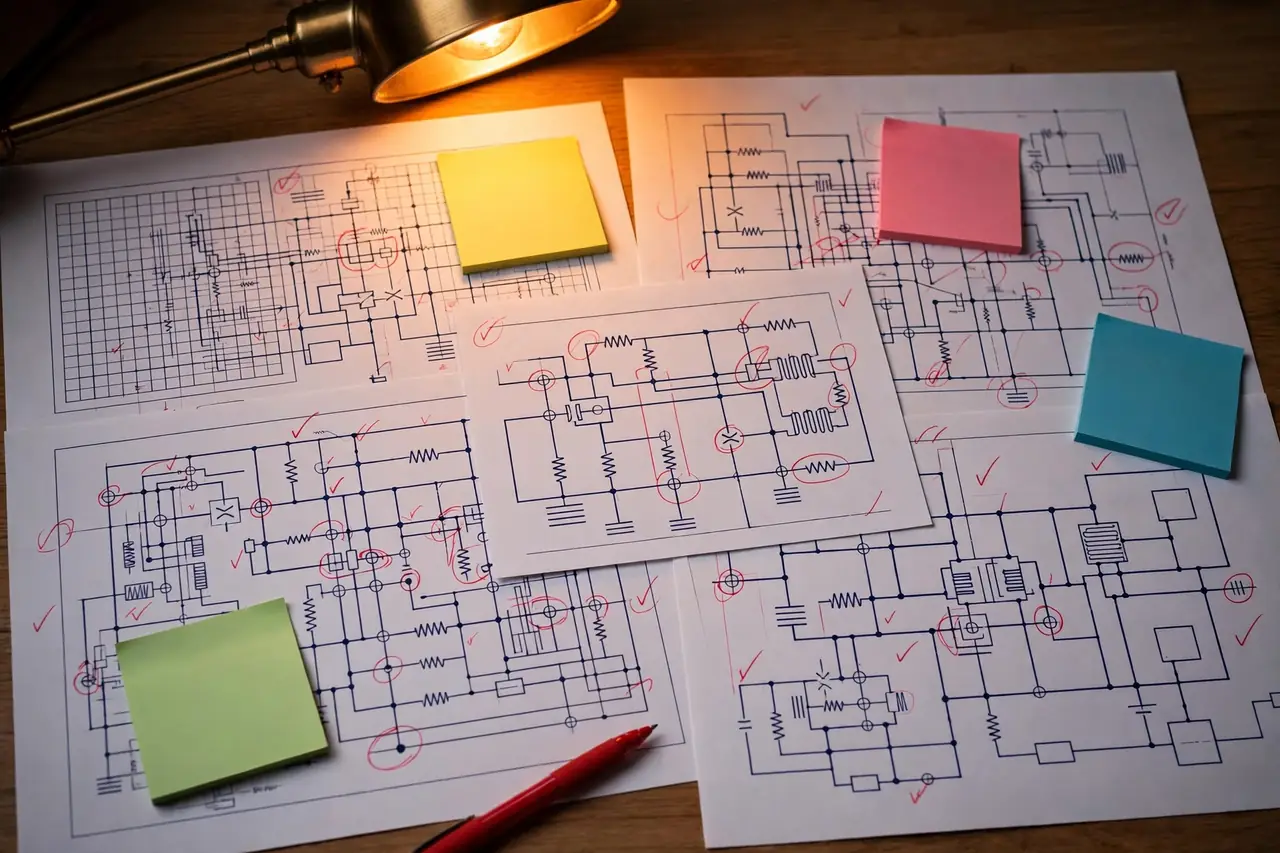
A rejection letter feels like a verdict on the whole project. Read a few of them closely, though, and a pattern shows up fast. Reviewers rarely write that a system cannot be built. They write that they cannot verify it from the sheets in front of them: a rating is missing, a model number conflicts, a required placard is nowhere in the set. The install may be sound. The paperwork does not prove it.
That is good news, because paperwork can be fixed with process. The six causes below cover most correction letters we see, and each one has a clear drafting habit that keeps it out of your next submission.
1. Missing labels and placards
The NEC requires specific labels at disconnects, inverters, services and points of interconnection, covering ratings, sources of supply, rapid shutdown and arc-flash warnings where they apply. Sets that treat labels as an afterthought, or squeeze them into a general note, come back with a comment almost every time. The fix is a dedicated labels sheet: every placard drawn at readable size, with exact wording and a note or plan marker showing where each one is installed. On solar work, add the directory placard and rapid shutdown labels the local rules call for. Drafting cost is small. The saved correction cycle is not.
2. Incomplete single-line diagram data
A single-line diagram that shows boxes and lines but skips ratings forces the reviewer to guess, and reviewers do not guess in your favor. Each segment needs conductor size and type, conduit size, overcurrent device type and rating, disconnect ratings and equipment models. Grounding must be shown or clearly noted. When any of that is missing, the comment writes itself. The drafting fix is a completeness pass against a fixed list: trace the path from source to load and confirm every segment carries its full data before the sheet is plotted. If a value comes from the engineer, it goes on the sheet; if it is unknown, it gets flagged before submission, not after.

3. Mismatched equipment specs
Few things erode reviewer trust faster than a set that disagrees with itself. The cover lists one inverter, the single-line diagram shows a second, and the cut sheet at the back is a third. A panel schedule names a main breaker size that the diagram contradicts. Each conflict earns its own comment, and the reviewer starts reading the rest of the set with suspicion. The fix is a cross-sheet check: one equipment list, taken as the source, compared against every sheet that mentions a model, rating or count. At VoltDraft this check is a named step in our internal review, done before delivery on every set.
4. No calcs shown
Reviewers need to verify sizing, not trust it. Sets that state conductor sizes and breaker ratings without showing the load calc, voltage drop figures, temperature-corrected values or the backfeed check at the panel give the reviewer nothing to verify, so the set comes back with a request to show the work. The values belong to the installer and their engineer. The drafting fix is presentation: a clear calcs summary, in table form, using the same numbers as the diagrams and schedules. When the calc chain is visible and consistent, this whole class of comment disappears.
5. Wrong NEC edition references
Areas adopt NEC editions on their own schedules. A set whose notes cite the 2023 edition in a 2020 area, or that mixes article numbers from two editions, signals a copied template and earns a correction. Rapid shutdown and labeling rules changed between editions, so the error is more than cosmetic. The fix starts at intake: confirm the edition the project uses, set the notes and references to that edition only, and check code citations during the internal pass. We ask for the NEC edition with every project for exactly this reason, and we draft solar sets to NEC 690 under the edition your AHJ enforces.
6. Sloppy title blocks and revision clouds
Wrong addresses, stale dates, sheet titles that do not match the index and, on resubmissions, missing revision clouds or deltas all slow review down. A reviewer who cannot tell what changed since the last submission may re-check the whole set, or bounce it for a clean revision record. The fix is basic drafting discipline: title block data checked against the cover, sheet index matched to the sheets in hand, and every resubmission clouded and tagged so changes can be found in seconds. It is unglamorous work, and it is where careful drafting earns its keep.
How a careful drafting pass prevents each cause
None of these fixes needs new software or a bigger team. They need a checklist and the habit of using it. Build the set to the AHJ's own list. Keep one equipment source of truth and check every sheet against it. Show the calcs. Cite one NEC edition. Cloud every change. At VoltDraft, the internal check before delivery works through exactly these items against your checklist, which is why first submissions from a checked set draw shorter comment letters. Engineering judgment stays with your licensed engineer; the drafting bench makes sure the sheets present that judgment completely and consistently.
What a strong resubmission package looks like
When a set does come back, the resubmission itself is a second chance to build trust. Answer the comment letter point by point, in writing, and tie each answer to the sheet where the fix appears. Cloud every changed area and add the revision delta and date in the title block, so the reviewer can verify each fix in seconds instead of re-reading the whole set. If a comment asks for data your engineer must supply, say so in the response letter and give the date it will follow, rather than resubmitting a set that still has the same gap. Reviewers remember complete, well-marked resubmissions, and back-checks on a clean package usually move faster than first reviews on a sloppy one.
Keep the comment letter with the project file, too. The items on it are a free checklist for your next project in the same area: the placard wording that AHJ insists on, the setback it dimensions, the sheet order it wants. Teams that fold each letter into their standard template stop seeing the same comments twice. Teams that treat each letter as a one-off surprise tend to meet the same list again on the next job, with a new address and the same lost weeks.
The pattern behind the list
Step back from the six causes and one theme runs through all of them: the reviewer could not verify something from the sheets alone. Permit review is a paper exercise. The reviewer does not visit the site, does not know your crew, and cannot call the field for every gap. A set either proves its own compliance, sheet by sheet, or it comes back with questions. That is why the strongest permit teams treat submittal day as an audit, not a mailing: one person reads the set cold, as a stranger would, and marks every place the trail goes missing. Thirty cold-read minutes before submission routinely save three weeks of correction cycle after it.
Frequently asked questions
What is the most common reason electrical plans get rejected?
Missing or incomplete information tops the list: labels and placards left out, a single-line diagram without full ratings, and specs that do not match between sheets. Most of these are drafting gaps, not engineering faults, which is why a careful check against the AHJ list before submission prevents so many of them.
How long does a correction cycle usually take?
It depends on the AHJ and the size of the comment list. The drafting side can move fast: send us the comment letter and the revised sheets are worked as a priority, often through the overnight workflow. Review time at the AHJ after resubmission is outside any drafter's control, so we never promise a permit date.
Can drafting support reduce rejection risk?
Yes, for the drafting causes of rejection. A set drafted to your AHJ checklist, with matching specs, complete labels and shown calcs, removes the most common comment items before review. Engineering questions still belong to your licensed engineer, who reviews and stamps the final set before submission.
Got a correction letter sitting on your desk?
Send the comment letter and your set on WhatsApp. We revise the sheets, cloud the changes, and return a clean resubmission package.
Chat on WhatsApp See Drafting Services